


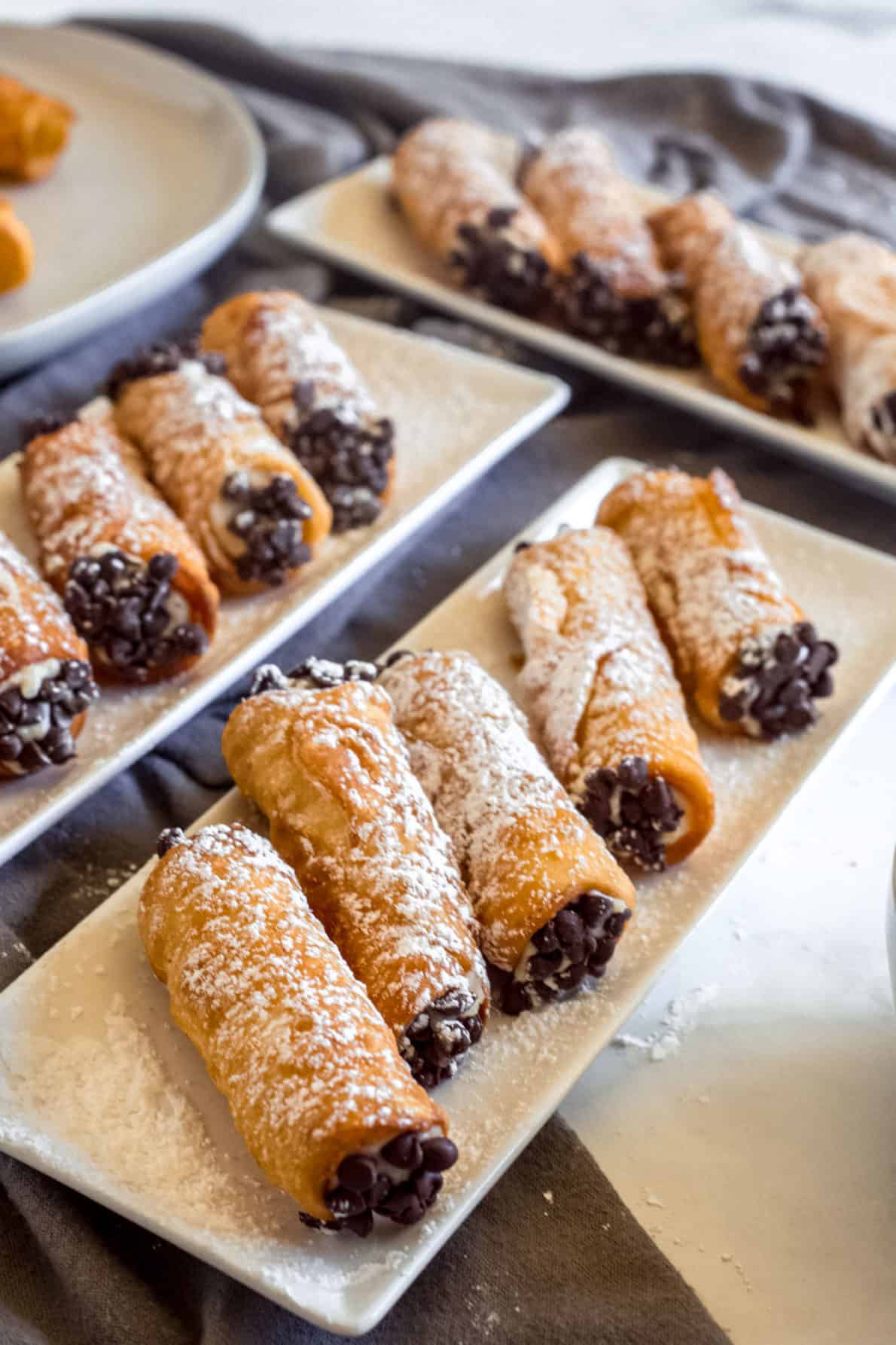
Make this authentic Homemade Cannoli Recipe with crispy fried shells and a creamy, sweet ricotta filling. Easy step-by-step recipe with tips for perfect results every time. It's a classic Italian dessert that looks as good as it tastes and will impress everyone who tries it!

🔍 Quick Look: Homemade Cannoli Recipe
- 🕒 Ready In: 1 hour 50 minutes
- 🍴 Servings: 28 cannoli
- 🔥 Calories: ~89 per serving
- ⭐ Main Ingredients: Ricotta cheese, white wine, chocolate chips, powdered sugar
- 📖 Dietary Info: Vegetarian
- 👩🍳 Method: Stovetop, hand mixer
- ⭐ Difficulty: Intermediate
I'll be honest: cannoli-making intimidated me for years. The fried shells, the ricotta filling, the special tubes you need. It felt like a recipe you should just leave to an Italian bakery. Then, when we took a trip to Rome a few years ago, I grabbed cannoli by the Trevi Fountain and decided it would be fun to finally try making the classic treat!
So that's what this recipe is built around. After some troubleshooting, I discovered how to make shells that come out genuinely crispy and bubbly, and filling that is thick, sweet, and creamy. I'll walk you through all of the steps for making perfect cannoli!
Looking for more fun Italian desserts to make? Try my Lemon Italian Ricotta Cookies, Stracciatella Gelato, and Chocolate Tiramisu.
Jump to:
❤️ Why You'll Love This Recipe
- Easier Than You Think - Homemade cannoli might look impressive, but the process of making them is actually pretty straightforward. If you can roll out dough and heat up oil, you can make these!
- Crispy and Creamy - The combination of a crunchy, flaky fried shell with that smooth, sweet ricotta filling is what makes cannoli completely irresistible. Store-bought shells just can't compare to these homemade ones.
- A Real Showstopper - Bring a plate to a party, and I guarantee they will be the first dessert to disappear.
- Customizable - These would be fun and easy to customize! Get creative by dipping the ends in crushed pistachios or even sprinkles. Mix in chocolate chips, citrus zest, or espresso powder into the filling to truly make them your own.
🛒 Key Ingredients
- Whole-milk ricotta: This is the heart of the filling, so don't reach for the part-skim kind. Drain it well before mixing so your filling turns out thick and creamy instead of watery. I explain how to do this in the recipe instructions.
- Marsala cooking wine: This is the traditional secret to authentic cannoli shells. It adds subtle depth and helps create those signature crispy edges when fried.
- Powdered sugar: Sweetens the filling without the grittiness you'd get from granulated sugar. It dissolves smoothly into the ricotta and keeps the texture extra silky. It's also used as a garnish to add just a sweet touch to the cannoli shells.
- Mini chocolate chips: The classic garnish for that signature look and texture.
See the recipe card below for full information on ingredients and quantities.
🔄 Substitutions & Variations
- Marsala wine: This is the traditional choice for the shells, but it's also easy to swap. For a non-alcoholic version, use an equal amount of white grape juice plus 1 tablespoon of white wine vinegar or sherry vinegar. The splash of vinegar mimics the slight tang the Marsala would have added.
- Ricotta swaps: For an even silkier filling, replace up to half the ricotta with mascarpone.
- No cannoli tubes? Wrap clean wooden dowels in aluminum foil to use as molds. They won't be perfectly uniform, but they get the job done.
- Shortcut shells: Short on time? Use quality store-bought cannoli shells and just make the filling. They're already fried, so you'll only need to fill and garnish them before serving.
🥣 How to Make This Homemade Cannoli Recipe
Shells
- In a large mixing bowl, whisk together the flour, granulated sugar, and salt until evenly combined. Add the butter and mix with an electric mixer on low until the mixture looks crumbly and no large clumps of butter remain; it should resemble coarse sand. Pour in the wine and the egg, then mix until the dough comes together into a shaggy ball.
- Transfer the dough to a lightly greased bowl, cover it, and let it rest at room temperature for 30 minutes. This step is really important. It relaxes the dough so it rolls out thin without springing back or tearing.
- While the dough rests, add a few inches of vegetable oil to a large, heavy pot and heat over medium. Use a thermometer and bring the oil to 345-355°F. Keeping it at this temperature is the key to crisp, blistered shells, too cool and they turn greasy, too hot and they brown before they bubble.
- On a lightly floured surface, roll the dough out very thin, about 1/16 inch (you should almost be able to see your hand through it). Thin dough is what gives you that signature crunch. Use a 4-inch round cookie cutter to cut out circles, gathering and re-rolling the scraps as you go.
- Lightly grease your cannoli forms. Wrap a dough circle around each form, then brush a little egg white where the two edges overlap and press firmly to seal. The egg white acts as glue, so the shells don't unwrap in the hot oil.
- Carefully lower each shell (still on its form) into the hot oil using metal tongs. Fry until deep golden brown, about 1-2 minutes. Work in small batches, so you don't crowd the pot or drop the oil temperature.
- Lift the shells out with metal tongs and set them on a paper towel-lined plate. Once they're cool enough to handle, use a paper towel to grip the hot form and gently slide the shell off. The forms will still be very hot, so be careful here.
- Let the shells cool all the way before filling. Filling them while warm will soften them, and you'll lose that delicious crunch.
Filling
- (Start this the night before.) Line a fine-mesh strainer with cheesecloth and scoop in the ricotta. Set the strainer over a bowl, fold the cheesecloth over the top, and weigh it down with something heavy like a can. Refrigerate for 12 hours to draw out the excess liquid. Don't skip this step, well-drained ricotta is the difference between getting a thick, creamy filling and a runny mess.
- In a bowl, stir together the drained ricotta, powdered sugar, cinnamon, and vanilla until smooth and creamy. Spoon the filling into a pastry bag (or a zip-top bag with one corner snipped off).
Assembly
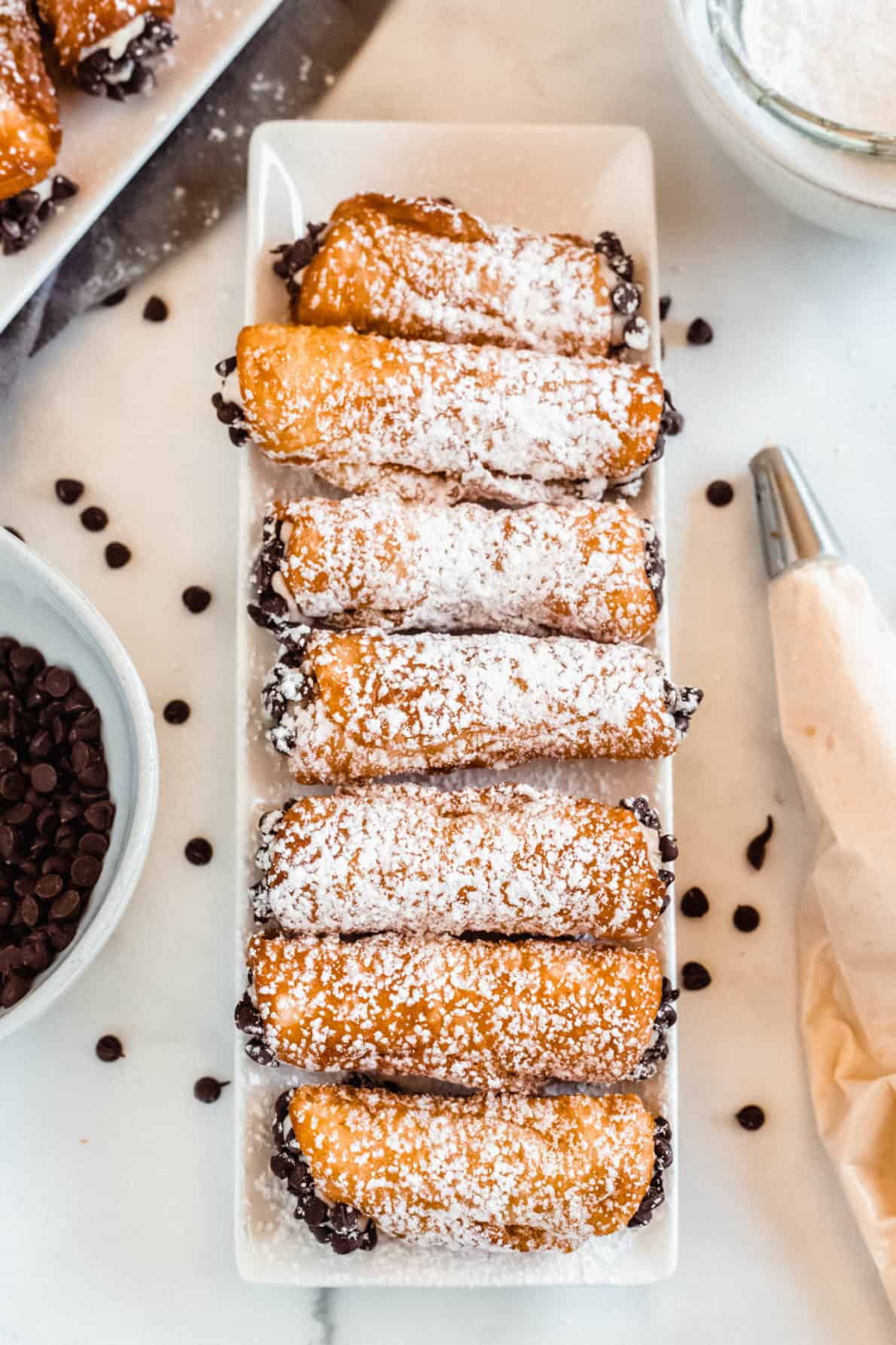
- Pipe the filling into one end of a shell until it reaches the center, then fill from the other end so it's evenly stuffed end to end. Fill the shells just before serving to keep them crisp.
- Dip each open end into mini chocolate chips and dust the finished cannoli with a little powdered sugar.
💭 FAQs
If you want to take the easy route, you can buy premade cannoli shells. I find homemade cannoli shells are fresher and taste more authentic, but if you're pressed for time (or don't want to put in the extra effort) there is no shame in buying premade. I won't judge!
I've found that the number one reason why cannoli filling isn't thick is that the ricotta cheese wasn't drained. This one simple step is SO important if you want a thick filling.
To drain the ricotta, you simply line a fine mesh strainer with a cheesecloth and place it over a bowl. Scoop the ricotta into the strainer and place the strainer and bowl in the fridge with a heavy object on top (I usually use something I already have in the fridge, like a container of sour cream). It's best to do this the night before you plan on making the ricotta.
Cannoli filling can be stored in an airtight container in the fridge for up to 4 days.
🍝 More Italian Recipes to Try

📋 Recipe

Homemade Cannoli Recipe
Equipment
Ingredients
Shells
- 2 cups all-purpose flour
- 1 ½ tablespoon granulated sugar
- ¼ teaspoon salt
- 2 tablespoons unsalted butter
- ½ cup white wine
- 1 egg
Filling
- 2 cups ricotta cheese drained
- ¾ cup powdered sugar
- ½ teaspoon cinnamon
- 1 teaspoon vanilla extract
- mini chocolate chips for garnish
- powdered sugar for garnish
Instructions
Shells
- In a large mixing bowl, whisk together the flour, granulated sugar, and salt until evenly combined. Add the butter and mix with an electric mixer on low until the mixture looks crumbly and no large clumps of butter remain, it should resemble coarse sand. Pour in the wine and the egg, then mix until the dough comes together into a shaggy ball.2 cups all-purpose flour, 1 ½ tablespoon granulated sugar, ¼ teaspoon salt, 2 tablespoons unsalted butter, ½ cup white wine, 1 egg
- Transfer the dough to a lightly greased bowl, cover it, and let it rest at room temperature for 30 minutes. This step is really important. It relaxes the dough so it rolls out thin without springing back or tearing.
- While the dough rests, add a few inches of vegetable oil to a large, heavy pot and heat over medium. Use a thermometer and bring the oil to 345-355°F. Keeping it at this temperature is the key to crisp, blistered shells, too cool and they turn greasy, too hot and they brown before they bubble.
- On a lightly floured surface, roll the dough out very thin, about 1/16 inch (you should almost be able to see your hand through it). Thin dough is what gives you that signature crunch. Use a 4-inch round cookie cutter to cut out circles, gathering and re-rolling the scraps as you go.
- Lightly grease your cannoli forms. Wrap a dough circle around each form, then brush a little egg white where the two edges overlap and press firmly to seal. The egg white acts as glue, so the shells don't unwrap in the hot oil.
- Carefully lower each shell (still on its form) into the hot oil using metal tongs. Fry until deep golden brown, about 1-2 minutes. Work in small batches, so you don't crowd the pot or drop the oil temperature.
- Lift the shells out with metal tongs and set them on a paper towel-lined plate. Once they're cool enough to handle, use a paper towel to grip the hot form and gently slide the shell off. The forms will still be very hot, so be careful here.
- Let the shells cool all the way before filling. Filling them while warm will soften them, and you'll lose that delicious crunch.
Filling
- (Start this the night before.) Line a fine-mesh strainer with cheesecloth and scoop in the ricotta. Set the strainer over a bowl, fold the cheesecloth over the top, and weigh it down with something heavy like a can. Refrigerate for 12 hours to draw out the excess liquid. Don't skip this step, well-drained ricotta is the difference between getting a thick, creamy filling and a runny mess.2 cups ricotta cheese
- In a bowl, stir together the drained ricotta, powdered sugar, cinnamon, and vanilla extract until smooth and creamy. Spoon the filling into a pastry bag (or a zip-top bag with one corner snipped off).¾ cup powdered sugar, ½ teaspoon cinnamon, 1 teaspoon vanilla extract
Assembly
- Pipe the filling into one end of a shell until it reaches the center, then fill from the other end so it's evenly stuffed end to end. Fill the shells just before serving to keep them crisp.
- Dip each open end into mini chocolate chips and dust the finished cannoli with a little powdered sugar.mini chocolate chips, powdered sugar
Notes
- Cannoli does not store well as the shells get soggy, so it's best to enjoy this dessert right away.
- If you don't plan on eating the cannoli right away, you can store the filling and shells separately and then assemble them right before consuming.


Ashley Amundsen says
Homemade cannoli may sound intimidating, but it's actually pretty easy and fun to make! I love how delicious this cannoli recipe is, perfect for a party.